
Our fabrics for cloth diapers
Our Fabrics for Cloth Diapers
Names such as microfleece, Coolmax and PUL can sound unfamiliar when you are starting with reusable diapers. Each material has a specific job: some absorb liquid, some help the skin feel dry, and others create a waterproof outer layer. Understanding these differences makes it easier to choose a diaper system that suits your routine.
Our reusable products are made in Poland. We select fabrics for comfort, durability and the function they need to perform, and we use material certifications where specified for the product.
Bamboo terry “Lamb”
This soft, looped fabric has a weight of 330 g/m² and a composition of 80% bamboo viscose and 20% polyester. It is designed to remain pleasant to the touch after repeated washing. We use it in selected daytime fitted diapers, long and short bamboo inserts, make-up removal pads, menstrual pads and nursing pads.
Natural bamboo terry
Natural bamboo terry combines 80% bamboo viscose with 20% cotton. Compared with the “Lamb” blend, it offers a high proportion of natural fibres and strong absorbency, although its texture may feel slightly less plush. It is used in products such as nighttime fitted diapers, long inserts, prefolds and selected absorbent inserts.
Microfleece
Microfleece is soft, durable and effective at moving moisture away from the surface. It can create a stay-dry feeling next to the skin while liquid passes into the absorbent layer below. This is why it is used in selected pocket diapers and stay-dry liners.
Microfleece itself is not the main absorbent component. It works together with an insert or fitted diaper that stores the liquid.
Coolmax
Coolmax is a breathable, quick-drying technical fabric. Its open structure helps moisture move away from the skin and makes it a useful inner layer in warm weather or for users who prefer a cooler feel.
We use Coolmax in selected pocket diapers, training pants and nursing pads. Always check the individual product description because inner materials vary between models.
Microfiber
Microfiber is an economical material that absorbs quickly and dries faster than many natural fibres. Its capacity and performance differ from bamboo or cotton inserts, so it is often used where frequent changes are possible or as one part of a combined absorbent system.
Microfiber should not be placed directly against the skin. It belongs inside a pocket diaper or under a suitable stay-dry or natural-fibre layer, according to the product instructions.
Cotton
Cotton is versatile, breathable and familiar from everyday clothing. We use selected cotton fabrics in training pants, pocket diapers, nursing pads and all-in-one diapers. The exact weave and composition are stated on each product page.
Cotton gauze
Cotton gauze is one of the most traditional reusable diapering materials. It can be folded around a baby or into a simple rectangular insert and combined with a waterproof cover. Flat edges make folding easier and help reduce bulky seams.
Our cotton gauze has a weight of 140 g/m² and may shrink by approximately 10% after washing. Outside diapering, it can also be used as a burp cloth, light towel or changing accessory.
PUL
PUL is the waterproof outer fabric used in diaper covers, pocket diapers and many other reusable products. It combines a soft textile surface with a laminated inner layer that helps prevent moisture from reaching clothing.
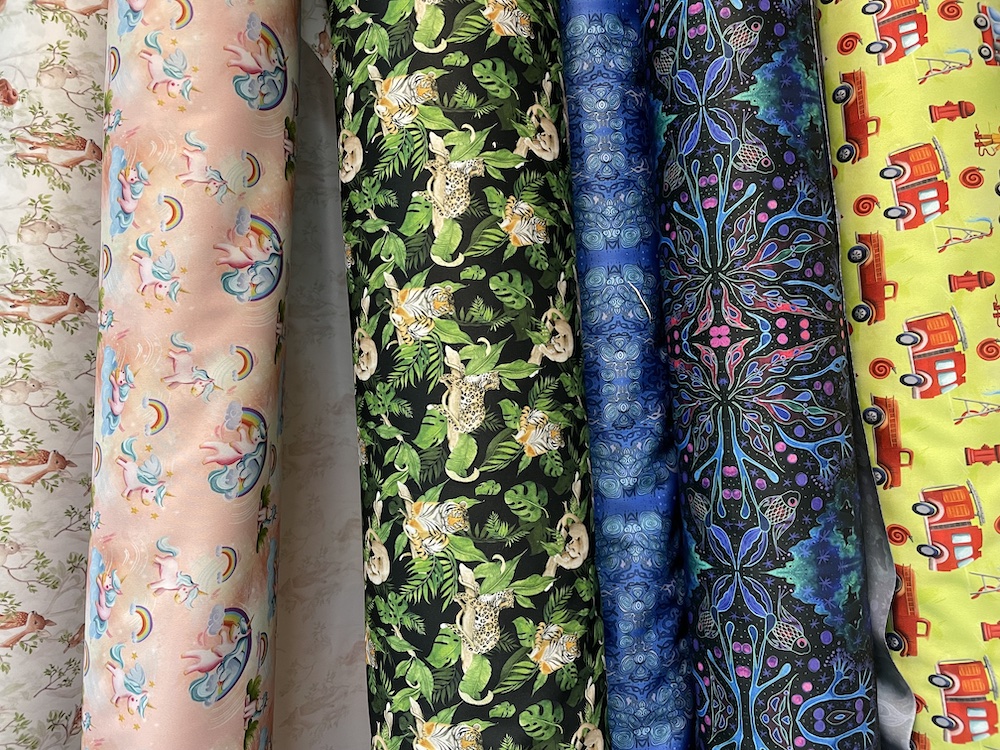
PUL also carries the colourful prints associated with Pupus products. Although it is thin and flexible, it requires suitable washing and drying to protect the laminate. Follow the care label and avoid temperatures or products that are not recommended for waterproof fabrics.
How to choose the right material
There is no single best fabric for every child or routine. Natural fibres usually offer strong absorbency, technical fabrics can improve moisture management and drying time, and PUL provides the waterproof barrier. Many reusable systems combine several materials so that each layer performs a different task.
Check the product description for the exact composition, intended use and care instructions. Choosing the right combination is easier when you consider absorbency needs, skin preferences, drying conditions and how often the product will be changed.